
- Diagnosing Ticking Noises
- Car Won't Start Flowchart
- Engine Overheating Diagnosis
- Brake Problem Flowchart
- Troubleshooting Car Steering
- Finding Short Circuits and Electrical Failures
Laptop Troubleshooting Flowcharts
- Laptop Power Flowchart
- LCD Problem Flowchart
- Laptop Battery Charging
- Troubleshooting Laptop Overheating
- Wireless Internet Connections
- Laptop Hard Drive Failure
- Extending Laptop Battery Life
- Buying a Second Hand Laptop
If It Jams
Troubleshooting Car Problem and Laptops with Diagnostic Flowcharts
Once we troubleshoot a problem, the next challenge is repairing it. In some cases, especially with late model appliances, parts are either unavailable or cost a prohibitive amount, in terms of replacement cost. Who would buy a new timer for a washing machine that costs 70% as much as a whole new washing machine? So the question becomes, "Can I epoxy this piece of junk back together so it lasts until the cheap electric motor fails?" I've been writing computer troubleshooting and repair texts since the mid-90's, always with the goal of helping people save money and keep stuff out of the landfill. Then I wrote a book about laptop repair that's intended for a broader audience, including people who don't aspire to any "beyond the warranty label" skills, and realized I had a problem. How could I tell somebody with a three or five year old laptop that it's worth spending several hundred dollars to have a technician repair something that can't be cured with a USB add-on? For those of us who do our own work, fixing it is more than half of the fun, but for people who pay for repairs, they have a right to expect fair advice about value. So I bit my lip and wrote a couple sections about the value, or lack thereof, in used computer equipment, and on how to shop for new stuff. I moved those laptop troubleshooting flowcharts over to this website a couple months ago..
But the idea of throwing away stuff that still works just sticks in my craw, and from an environmental standpoint, it usually doesn't make sense. People forget about the energy cost of manufacturing new stuff when they throw away their old appliances to replace them with higher efficiency units, not to mention the disposal of the old equipment. Certainly, if you can replace an old 50% efficient oil burner with a new unit pushing 90%, it's gong to make sense for both your pocketbook and the environment. But trading in washing machines every few years doesn't make a bit of sense, it's bad enough that the don't last nearly as long as they should. I've included pricing guides for second hand PCs and laptops on this site, just to give you a practical idea of market value.
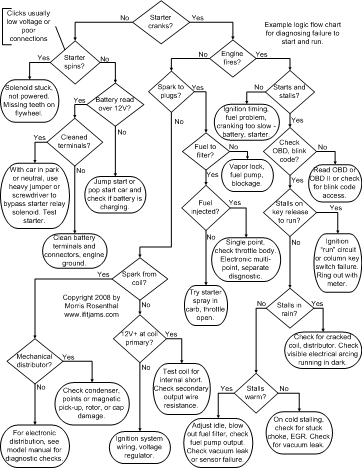
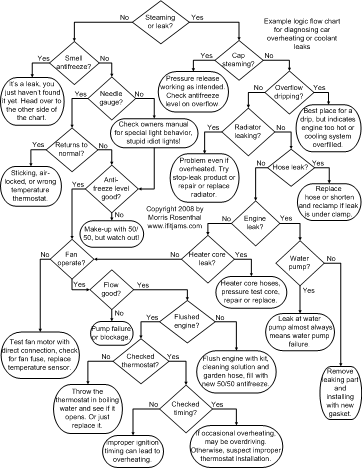
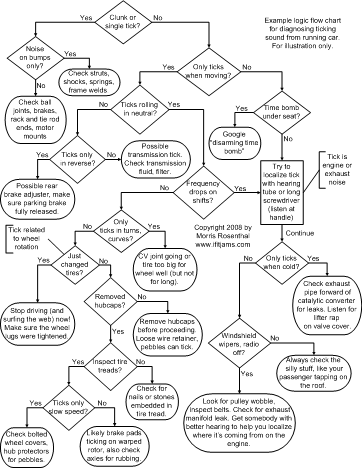
When the problem you're trying to fix isn't obvious, it can help to have a flowchart that logically takes you through the process of elimination. Several of my published computer repair books feature a troubleshooting approach based on flowcharts. I've been working on a new series of automotive diagnostic flowcharts, with drafts completed for starting problems, overheating and coolant loss, and ticking noises. Click on the miniature troubleshooting flowcharts to expand for the full size, with expanded text explanations for every decision point.
As an Amazon Associate I earn from qualifying purchases of my books.

|
Cars are another interesting example. I bought a new Dodge Omni back in 1986 with manual a five speed transmission and 2.2 liter engine. The car gets 40 miles per gallon on the highways or the backroads, I rarely get it over 1500 rpm on most of the trips I take. The whole key to fuel economy in vehicles is keeping them light, and it's a damn shame that Detroit never got with the program. But now the Omni is in trouble, 22 years on salted New England roads will do that to a unibody. Rather than consigning it to the junkyard, I'm going to try a rehab project, something I could never justify on a simple cost basis because of the time and materials. But how can anybody say it makes sense to throw away a car that gets 40 MPG? Unfortunately, before I get to mechanics, I've got to do something with the rusted out unibody. Many serious auto repair mechanics and restoration type guys live by the moto, "If it jams, force it. If it breaks, it needed replacing anyway." Their logic is that everything should run like new, and if it can't handle the load, it should be replaced with something that can. My moto is, "If it jams, fix it. If it breaks, fix it again." I'm the guy who keeps putting tin cans on the exhaust pipe until I run out of pipe to clamp to because it's all cans. I've recently started adding some pages on heavy equipment repair with content from my buddy Mike Dougan, who owns EERS, a company specializing in industrial equipment repair.
|